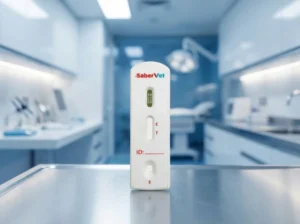
You can streamline your cattle breeding decisions with the Bovine Pregnancy Test Cassette. This tool gives you fast and accurate results, making the process easier and more affordable. The SaberVet Bovine Pregnancy Rapid Test stands out because it shows results as early as 26 days after breeding. Large-scale operations use these tests more often than small farms. Here is a quick look at adoption rates:
| Scale of Operation | Adoption Rate | Challenges Faced |
|---|---|---|
| Small-scale | Low | High acquisition costs, limited financial resources, lack of proficiency |
| Large-scale | High | Better financial capacity, need for optimized breeding cycles |
Key Takeaways
- The Bovine Pregnancy Test Cassette provides fast results, allowing you to check for pregnancy as early as 26 days after breeding.
- This test is easy to use and does not require special training, making it accessible for anyone on your team.
- High accuracy rates (99% sensitivity and 98.8% specificity) ensure reliable results, helping you make informed breeding decisions.
- Storing the test at room temperature simplifies its use in the field, enhancing convenience for farmers.
- Early detection of pregnancy can improve herd productivity and reduce wasted time and resources in breeding cycles.
About the Bovine Pregnancy Test Cassette
How It Works
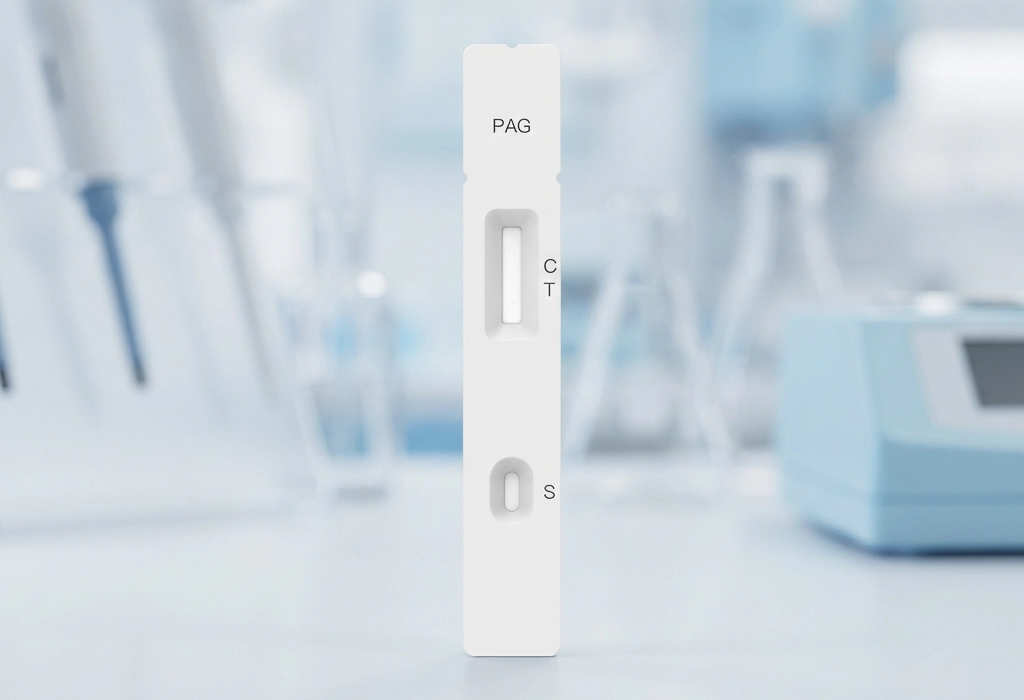
You can use the SaberVet Bovine Pregnancy Rapid Test to check for pregnancy in your cattle with confidence. This Bovine Pregnancy Test Cassette detects Pregnancy-Associated Glycoproteins (PAGs) in the blood. PAGs are special proteins that appear in the blood of pregnant cows and heifers. Scientists have found that pregnant heifers and cows show much higher PAG levels than non-pregnant females. The table below shows the difference in PAG concentration:
| Group | PAG Concentration (ng/mL) | Significance |
|---|---|---|
| Pregnant Heifers | 1.69 ± 0.10 | P < 0.01 |
| Pregnant Cows | 0.30 ± 0.07 | P < 0.01 |
| Non-Pregnant Females | N/A | N/A |
The test uses a double-antibody sandwich system on a nitrocellulose membrane. When you add a blood sample, the cassette shows a purple band if PAGs are present. If you do not see a band, the result is negative. This method gives you a clear answer without complicated steps.
Key Features
The Bovine Pregnancy Test Cassette stands out for its quality and convenience. The SaberVet test is made in a facility with top certifications. Here is a summary of its certifications:
| Certification | Description |
|---|---|
| ISO 9001 | Management System |
| GMP | Good Manufacturing |
| CE | European Conformity |
| ISO 13485 | Approved Standards |
You can store the test at room temperature, which makes it easy to use on the farm or in the field. The test has a shelf life of 24 months. To keep your test in good condition, follow these tips:
- Store the kit in a cool, dry place.
- Keep it at 2-30°C.
- Avoid direct sunlight, moisture, and heat.
- Do not use expired components.
Tip: Always check the expiration date before using the test to ensure accurate results.
The Bovine Pregnancy Test Cassette gives you a reliable, easy-to-use tool for managing your herd’s breeding program.
Key Benefits for Breeders
Speed and Early Detection
You can make breeding decisions faster with the Bovine Pregnancy Test Cassette. This tool lets you check for pregnancy in cattle as early as 28 days after breeding. You do not have to wait months to know if your cows are pregnant. The test finds special markers in the blood about four weeks after conception. Early detection helps you manage your herd better and avoid wasted time.
- You can diagnose pregnancy quickly.
- You can spot reproductive failures sooner.
- You can plan your breeding cycles with more confidence.
Early pregnancy diagnosis boosts herd productivity. You can act fast and keep your operation running smoothly.
Accuracy and Reliability
You can trust the results from the Bovine Pregnancy Test Cassette. The SaberVet test uses pregnancy-associated glycoproteins (PAGs) as markers. These markers appear early in pregnancy and stay in the blood throughout gestation. The test gives you high sensitivity (99%) and specificity (98.8%), so you get reliable answers.
Here is a table showing the rates of false positives and false negatives from studies:
| Study | False Negative Rate | False Positive Rate |
|---|---|---|
| Commercial Pregnancy Test Using Blood or Plasma Samples in Dairy Cows | 0% | Varies (80-100 days postpartum) |
| Early Conception Factor Lateral Flow Test for Nonpregnancy in Dairy Cattle | 100% (negative predictive value) | 35% (milk), 75% (serum) |
You can use this test to make informed decisions. Accurate results help you identify cows that are not pregnant. You can rebreed them sooner and improve your herd’s reproductive efficiency.
- You get dependable answers for herd management.
- You can increase the profitability of your beef herd.
- You can reduce the risk of mistakes in breeding.
Ease of Use
You do not need special training to use the Bovine Pregnancy Test Cassette. The process is simple. You collect a blood sample, add it to the cassette, and check for a purple band. The test works in the field and does not require refrigeration. Veterinarians, dairy farms, and beef producers find it convenient.
- You can use the test anywhere on your farm.
- You do not need complex equipment.
- You save time and money with easy procedures.
The Bovine Pregnancy Test Cassette helps you reduce breeding cycles, increase success rates, and control costs. You can focus on growing a healthy and productive herd.
Comparing to Traditional Methods
Cassette vs. Rectal Palpation
You can see a clear difference between the Bovine Pregnancy Test Cassette and rectal palpation. Rectal palpation requires you to wait until 30 to 35 days after estrus to detect pregnancy. The test cassette lets you check as early as 26 days after breeding. This means you can make decisions sooner and keep your breeding schedule on track.
| Method | Average Detection Time |
|---|---|
| Rectal Palpation | 30 to 35 days post-estrus |
| Test Cassette | As early as 26 days after breeding |
Rectal palpation gives detailed information about pregnancy and possible abnormalities. You need special skills to perform it. Some people worry about fetal safety, but studies show no significant difference in fetal viability. The test cassette offers a simpler and more convenient way to detect pregnancy. You do not need advanced training or equipment.
Tip: Using the cassette reduces stress for both you and your cattle. You avoid complex procedures and save time.
Cassette vs. Ultrasound
Ultrasound is another common method for pregnancy detection. You need special equipment and training to use it. The process can take longer and may cause stress for the animals. The Bovine Pregnancy Test Cassette gives you reliable results without complicated steps.
- In a study with 460 cattle, the test cassette showed 97% sensitivity, which matches the accuracy of ultrasound.
- The negative predictive value was 95%, so you can trust the results when the test says a cow is not pregnant.
- The specificity reached 88%, higher than some other tests.
- Overall accuracy was 93%, showing the cassette is dependable for pregnancy detection.
You can use the cassette anywhere on your farm. You do not need to move cattle or set up special equipment. This makes the process easier for you and less stressful for your herd.
Note: The cassette method streamlines pregnancy detection and helps you make faster, more confident breeding decisions.
How to Use the Test Cassette
Step-by-Step Process
You can use the Bovine Pregnancy Test Cassette in the field with just a few simple steps. Follow this guide to collect a blood sample and run the test:
- Use a clean syringe and needle. Insert the needle through the skin on the underside of the tail, about ½ inch deep, at the midline, and 3 to 6 inches from the base.
- Pull back on the plunger until you see a flash of blood. Keep pulling slowly to collect at least 2 cc’s of blood.
- Transfer the blood into a red top tube. Use the needle to puncture the stopper of the tube and let the blood flow in.
- Allow the blood to clot and separate the serum if needed.
- Add the sample to the test cassette as directed in the instructions.
- Wait for the results to appear. Look for a purple band to check the outcome.
Best Practices
You should always follow best practices to get the most accurate results from your test.
- Collect blood samples carefully to avoid contamination.
- Store the test kit at room temperature. You do not need to refrigerate it.
- No special training is needed. Anyone on your team can use the test after reading the instructions.
- Read the results within the recommended time frame. A visible line, even if weak, means the cow may be pregnant. If you see a faint line, retest the cow in 7 days for confirmation. A stronger line later shows the pregnancy is progressing. If the line disappears, it may mean embryonic loss.
- Keep the test kit away from direct sunlight and moisture.
Tip: Always check the expiration date before using the test to ensure reliable results.
The Bovine Pregnancy Test Cassette makes pregnancy detection easy and reliable, helping you manage your herd with confidence.
You can boost herd productivity and make smarter breeding decisions with the Bovine Pregnancy Test Cassette. Early pregnancy diagnosis helps you reduce calving intervals by about one month, giving your cows more productive days. The table below shows how test kits save time and labor compared to traditional methods:
| Method | Accuracy | Time-to-Result | Labor Needed |
|---|---|---|---|
| Rectal Palpation | 85-90% | Immediate | Veterinarian |
| Ultrasound | 95-97% | 5-10 min | Technician |
| Test Kits | 98.3% | 15 min | Farmhand |
“Our clients report 14-18 month payback periods on test kit investments,” says Kintek Detection’s livestock market manager.
You can rely on rapid tests for better herd management and long-term savings.
FAQ
How soon after breeding can you use the Bovine Pregnancy Test Cassette?
You can use the test as early as 26 days after breeding. Early testing helps you make faster decisions about your herd.
Do you need special training to use the test cassette?
No special training is needed. You can follow the instructions and get accurate results. Anyone on your team can use the test.
Can you store the test kit at room temperature?
Yes, you can store the kit at room temperature. Keep it between 2°C and 30°C. Avoid direct sunlight and moisture for best results.
What does a faint purple band mean on the test cassette?
A faint purple band usually means early pregnancy. You should retest the cow in 7 days. A stronger line later confirms pregnancy.
If you are looking for high-sensitivity test strips, you can find our all Sabervet® diagnostics products here. For those seeking integrated diagnostic systems or partnership opportunities, please explore our Sabervet® diagnostic solutions online store here.
See Also
Effective Methods for Identifying Canine Distemper Using Rapid Tests