
Why Cow Pregnancy Testing Matters More Than You Think
In the breeding of beef cattle and dairy cows, timely and accurate determination of whether the cows are pregnant is a crucial step in improving breeding efficiency and reducing production costs. Every day a cow goes without a confirmed pregnancy diagnosis is money left on the table — feed costs add up, breeding windows close, and your calving interval stretches wider than it needs to be.
Pregnancy testing in cattle is a core part of reproductive management in large-scale cattle farms. Its purpose is to determine as early as possible whether a cow is pregnant after mating, so as to cull non-pregnant cows in a timely manner, arrange for re-mating, and improve breeding efficiency. According to research published in Theriogenology, early pregnancy detection can reduce the average calving interval by up to 30 days per cow, directly translating to higher annual productivity (Santiago et al., 2020).
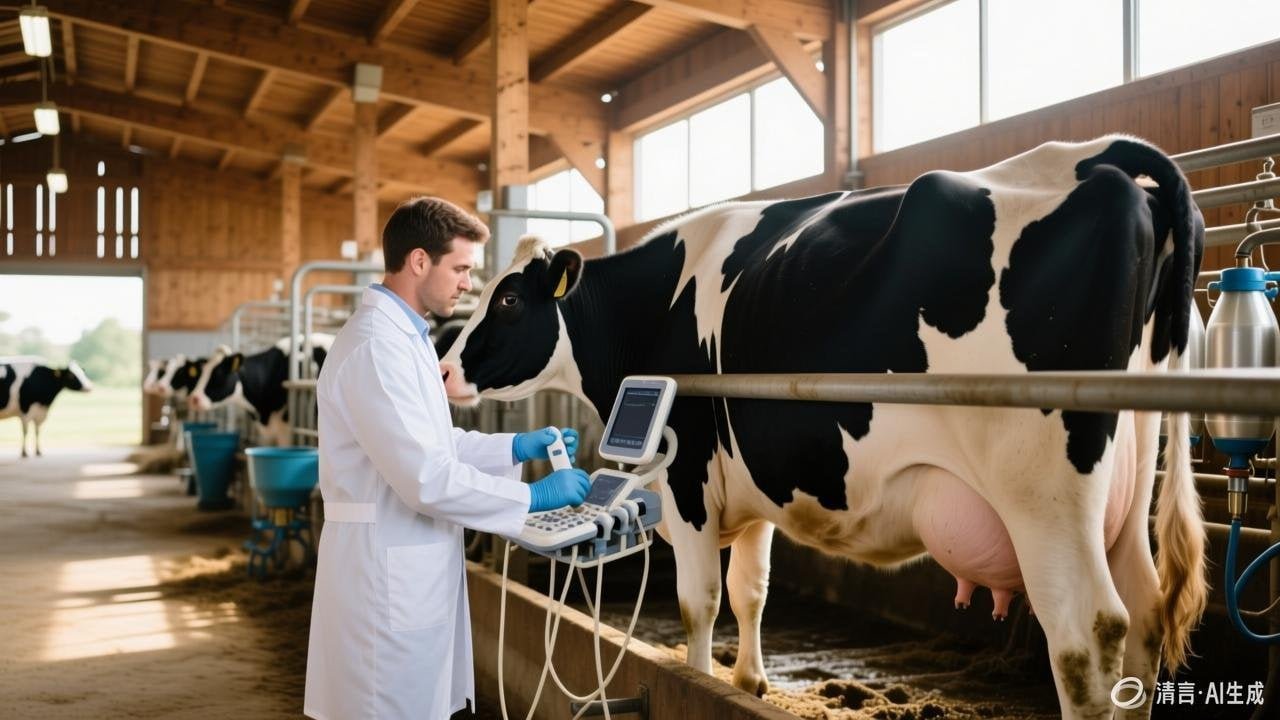
Whether you’re running a 50-head dairy operation or managing thousands of beef cattle across multiple ranches, understanding the fundamentals of bovine pregnancy testing is non-negotiable. Let’s break down what it is, how it works, and — most importantly — what your fastest options are.
What Is a Bovine Pregnancy Test and How Does It Work?
A bovine pregnancy test is any diagnostic method used to confirm whether a cow has conceived after insemination. The goal sounds simple enough, but the science behind it is surprisingly nuanced. After successful breeding, the cow’s body begins producing a family of proteins called Pregnancy-Associated Glycoproteins (PAGs), which are secreted by the binucleate cells of the trophectoderm — the outer layer of the developing placenta.
These PAG proteins appear in the maternal bloodstream as early as 21–28 days post-breeding and can be detected through a simple cow pregnancy blood test. This is a game-changer compared to older methods that required more invasive procedures or longer waiting periods.
| Method | Earliest Detection | Accuracy | Equipment Needed |
|---|---|---|---|
| Rectal Palpation | 35–45 days | 85–95% | Gloves, experience |
| Transrectal Ultrasound | 26–30 days | 95–99% | Ultrasound machine ($3K–$10K) |
| PAG Blood Test | 26–28 days | 95–99% | Test cassette, blood sample |
| Milk Progesterone | 21–24 days | 75–85% | Milk sample, lab access |
As the table above shows, each method has trade-offs. Rectal palpation is cheap but requires significant skill and can only be performed later in gestation. Ultrasound is highly accurate but demands expensive equipment and trained operators. Blood-based PAG detection, however, hits the sweet spot: early results with high accuracy, minimal equipment, and no need for specialized training.
How Reliable Is a Cattle Pregnancy Test, Really?
Here’s the honest answer: it depends on the method and the timing. Ask any large-animal veterinarian, and they’ll tell you that false negatives are far more common than false positives — and for good reason. Early embryonic loss is a real phenomenon. Studies estimate that 10–15% of confirmed pregnancies fail before day 45 (Wiltbank et al., 2019, Journal of Dairy Science).
So when a cattle pregnancy test comes back negative at day 28, it could mean the cow didn’t conceive — or it could mean the embryo was lost. That’s why many experienced herd managers prefer to re-test at around day 60 to confirm open cows before making culling decisions.
The reliability question is also why the test you choose matters so much. A pregnancy test for cows that detects PAGs tends to have a lower false-negative rate compared to milk progesterone testing, because PAGs are produced exclusively by the placenta — not by the corpus luteum, which can persist even in non-pregnant animals.
Why a Cow Pregnancy Blood Test Beats the Old-School Methods
Let’s be direct: if you’re still relying solely on rectal palpation, you’re leaving time and money on the table. The cow pregnancy blood test has fundamentally shifted how modern cattle operations handle reproductive management, and here’s why.
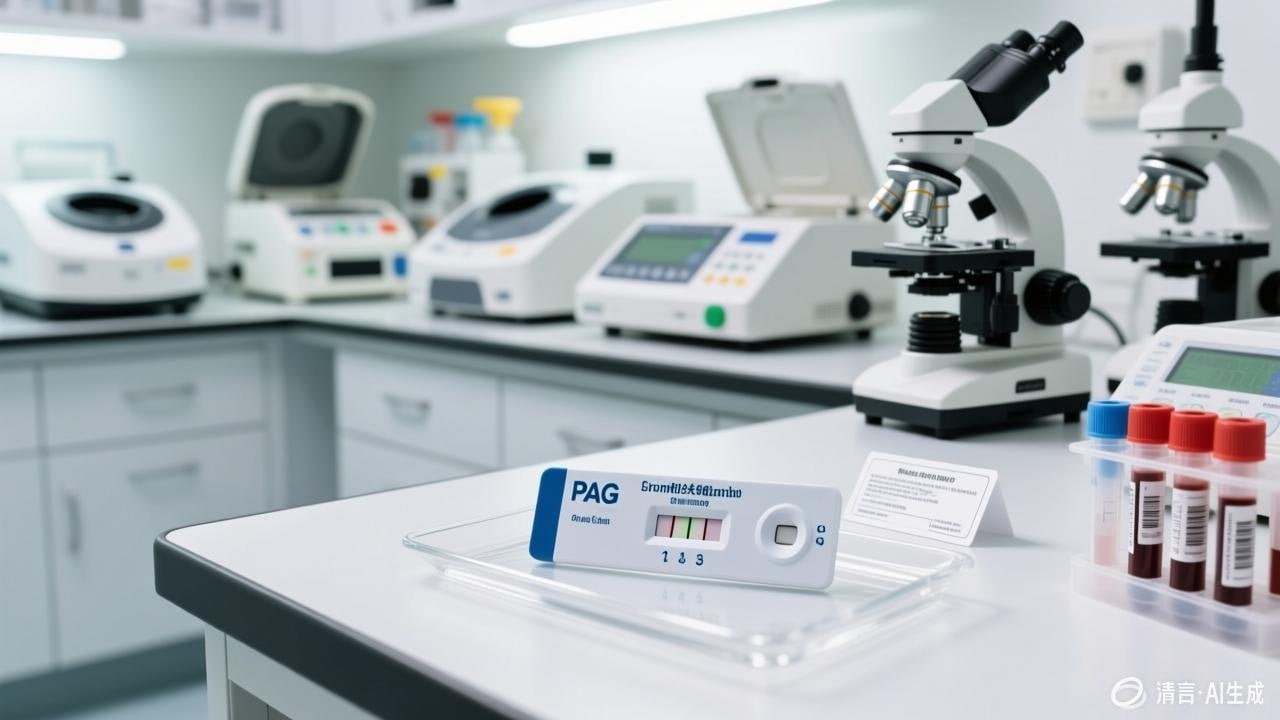
First, speed. PAG-based rapid tests deliver results in 15–20 minutes right at the chute. No sending samples to a lab, no waiting days for results. You draw blood, run the cassette, and know before the cow walks back to the pen.
Second, simplicity. The Sabervet Bovine Pregnancy Rapid Test, for instance, requires nothing more than a blood collection tube and the test cassette itself. No ultrasound probe to calibrate, no expensive machine to maintain, and no need to hire a specialized technician. As covered in our deep dive on the Sabervet Bovine Pregnancy Rapid Test, this tool has made early detection accessible to operations of all sizes.
Third, cost-effectiveness. When you factor in labor, equipment depreciation, and the cost of missed breeding windows, PAG rapid testing typically comes out ahead. For more on the economics, our article on why 26 days is the magic number for herd profitability breaks down the math.
Research from the Preventive Veterinary Medicine journal confirmed that on-farm PAG testing reduced re-breeding intervals by an average of 21 days compared to rectal palpation alone (Ricci et al., 2019). That’s three weeks of feed savings per open cow — multiply that across a herd of 500, and the impact is substantial.
Can a Bovine Pregnancy Test Help Beef Cattle, Not Just Dairy?
Absolutely. While dairy operations get more attention when it comes to reproductive management, beef cattle producers stand to benefit just as much — maybe even more. In beef herds, the economics are different: a missed pregnancy doesn’t just mean delayed milk production, it means a lost calf and a delayed breeding cycle that pushes your calving season further out.
The bovine pregnancy rapid test methods for beef cattle we’ve covered previously apply directly here. Blood-based PAG detection works identically in beef breeds as it does in dairy, with the same 26–28 day detection window and comparable accuracy rates.

For operations running artificial insemination (AI) or embryo transfer programs, early pregnancy confirmation is even more critical. Knowing which cows took allows you to allocate resources to confirmed pregnancies and move quickly to re-breed the open ones. The cow pregnancy test methods guide offers a step-by-step walkthrough for farm-level implementation.
Frequently Asked Questions About Cow Pregnancy Testing
How early can you test a cow for pregnancy?
With PAG-based blood tests, pregnancy can be reliably detected as early as 26 days after breeding. Ultrasound can detect pregnancy around day 28–30 with high reliability. Rectal palpation is typically performed at 35–45 days.
How accurate are cow pregnancy blood tests?
Modern PAG-based rapid tests achieve 95–99% accuracy when used at or after 28 days post-breeding. Accuracy drops if testing is performed too early (before day 26), as PAG levels may not yet be detectable.
Can I perform a bovine pregnancy test myself?
Yes. PAG rapid test cassettes are designed for on-farm use by herd managers and veterinarians alike. They require only a blood sample and deliver results in 15–20 minutes without specialized laboratory equipment. For a detailed comparison, see our article on how the bovine pregnancy test cassette simplifies breeding decisions.
What does PAG stand for in pregnancy testing?
PAG stands for Pregnancy-Associated Glycoproteins. These are proteins produced by the developing placenta in pregnant cows. They appear in maternal blood and serve as highly specific biomarkers for pregnancy — they are not found in non-pregnant animals.
Is blood testing better than ultrasound for cow pregnancy detection?
Both methods are highly accurate. Blood testing wins on cost, simplicity, and portability. Ultrasound provides additional information like fetal age, sex, and viability. Many operations use blood testing as a first-pass screen and ultrasound for confirmation or detailed assessment.
The Bottom Line
Cow pregnancy testing isn’t optional — it’s one of the highest-ROI management practices you can implement on a cattle operation. The shift from rectal palpation and lab-based hormone assays to on-farm PAG blood testing has removed the biggest barriers: time, cost, and complexity.
If you’re still waiting 45 days to palpate or shipping blood samples to a distant lab, the faster option already exists. PAG-based rapid testing delivers near-laboratory accuracy in 15 minutes, right where you need it — at the chute, on your farm.
The question isn’t whether to adopt faster testing. The question is how much longer you can afford not to.
Ready to Speed Up Your Herd’s Reproductive Management?
Explore trusted PAG-based pregnancy testing solutions from industry leaders:
- Sabervet — Rapid on-farm PAG pregnancy test cassettes built for speed and accuracy
- ITGen — OEM manufacturer with ISO GMP-certified diagnostic production
- Tailhealthy — Animal health solutions for modern livestock operations