
When High-Path H7 Hit a Tennessee Poultry Farm
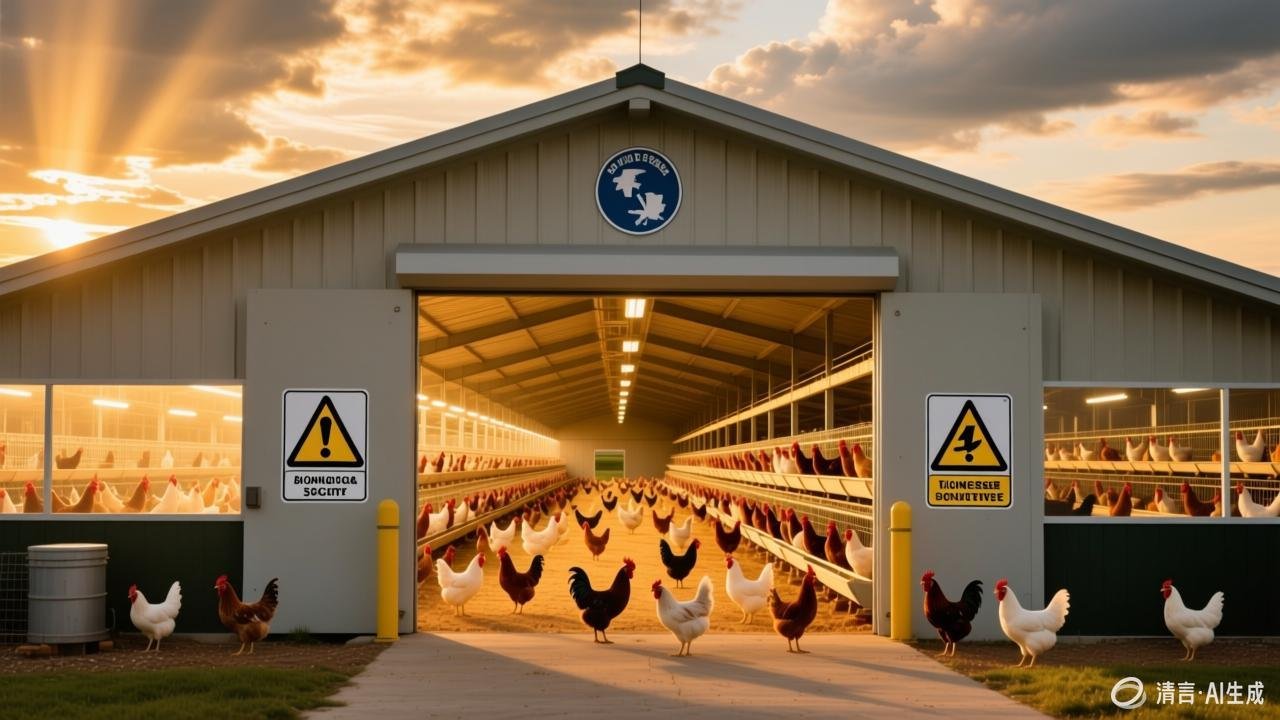
In March 2017, a commercial poultry operation in Lincoln County, Tennessee, became ground zero for one of the most significant highly pathogenic avian influenza (HPAI) events in the southeastern United States. The culprit? A high-pathogenicity H7N9 avian influenza virus — not the Asian lineage that dominated headlines in human health, but a North American reassortant that mutated from low-path to high-path after circulating quietly in wild bird populations. Within days, the entire flock of 73,500 chickens was depopulated. Neighboring farms within a 10-kilometer radius were placed under quarantine. The USDA’s Animal and Plant Health Inspection Service (APHIS) mobilized a rapid response team, and the economic ripple effects were felt across the region’s poultry industry.
What made this outbreak particularly instructive wasn’t just the speed of the response — it was the diagnostic reality on the ground. Initial detection relied on PCR confirmation at USDA’s National Veterinary Services Laboratories (NVSL), which meant a waiting period measured in days, not hours. In that window, the virus spread silently through contact points, equipment, and personnel movement. The Tennessee outbreak exposed a critical gap: when every hour counts, farms needed faster, field-deployable screening tools. That’s exactly where an AIV H7 antigen rapid test changes the equation — delivering results in 10–15 minutes without requiring a lab, cold chain, or specialized training.
Why a One-Step H7 Ag Rapid Test Could Have Changed the Timeline
Here’s the uncomfortable question that every poultry veterinarian and farm manager should be asking: if your farm’s survival depends on detecting H7 avian influenza within hours of the first clinical signs, can you really afford to wait for lab confirmation?
During the Tennessee outbreak, the timeline from initial suspicion to official confirmation took roughly 48–72 hours. That included sample collection, transport to the diagnostic lab, RNA extraction, real-time RT-PCR processing, and result reporting. In an industry where a single infected bird can expose thousands of flockmates within that same window, the delay wasn’t just frustrating — it was economically devastating.
A One-step H7 Ag rapid test addresses this gap head-on. The lateral flow immunochromatographic technology detects H7 antigens directly from cloacal or oropharyngeal swabs in a single step: apply the sample, wait 10–15 minutes, read the result. No reagents to prepare, no equipment to calibrate, no cold chain to maintain. Research published by the Journal of Virological Methods has consistently demonstrated that antigen-based rapid tests achieve clinical sensitivity above 90% when used during the acute phase of infection — precisely when viral loads are highest and clinical signs first appear.
For a poultry farm the size of the Tennessee operation, the math is stark. Deploying a rapid screening tool at the first sign of respiratory distress, drop in egg production, or increased mortality could compress the detection-to-response window from days to minutes. Early detection means earlier quarantine, fewer exposed birds, and a significantly smaller depopulation footprint.
Not All CE Marked Avian Influenza Tests Are Created Equal — Here’s What Separates the Reliable Ones
So you’ve decided to stock rapid tests for avian influenza. Smart move. But here’s the follow-up that trips up more buyers than it should: how do you know the test sitting in your biosecurity kit actually performs when a high-path virus hits?
The CE marking on a veterinary diagnostic device isn’t decorative — it’s a regulatory declaration that the product meets European safety, health, and environmental protection requirements. But the depth of supporting data varies enormously. A CE marked avian influenza test factory that has invested in ISO 13485 quality management systems, GMP-compliant manufacturing, and peer-reviewed validation studies produces fundamentally different test kits from a facility that met the minimum checkbox requirements.
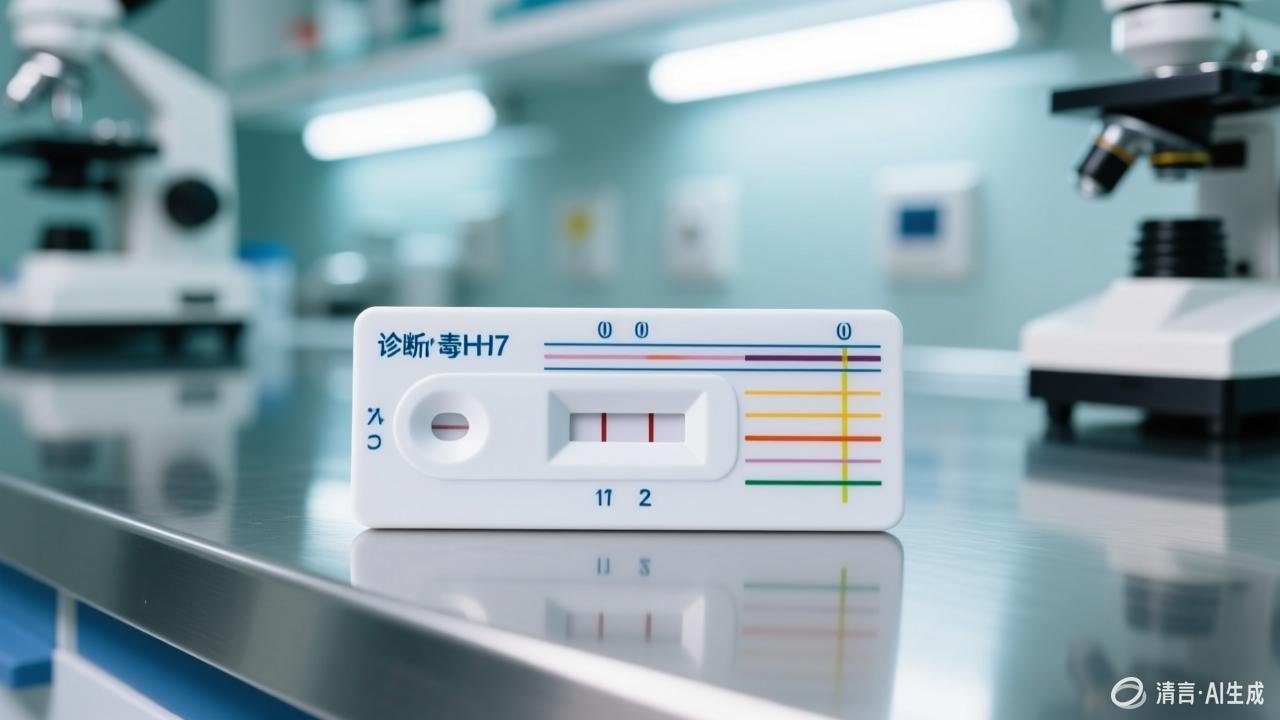
ITGen, the ISO and GMP-certified manufacturer behind the Sabervet diagnostic range, operates under exactly those rigorous standards. The Sabervet Avian Influenza Virus H7 Antigen Rapid Test is manufactured in a facility audited to international standards, with each production batch subjected to quality control protocols that include sensitivity, specificity, and lot-to-lot consistency testing. According to data compiled by the World Organisation for Animal Health (WOAH), on-farm rapid antigen testing has become a recommended component of surveillance programs in regions where HPAI is endemic or recurrent.
The practical difference matters. When a farm in the southeastern U.S. detected H7 in 2017, the response required coordination between state animal health officials, USDA APHIS, and private veterinarians. Tests that deliver consistent, interpretable results across operators and conditions reduce the risk of false negatives that could delay containment — or false positives that trigger unnecessary culling.
How the AIV H7 Lateral Flow Assay Works Under Real-World Conditions
Let’s say you’re a poultry veterinarian called to a farm where mortality has ticked up 15% overnight. Birds are showing lethargy, ruffled feathers, and cyanotic combs. Your differential diagnosis includes Newcastle disease, infectious bronchitis, and avian influenza. The question isn’t whether to test — it’s how fast you can get a result that changes what happens next. And isn’t that the entire point of on-farm diagnostics?

The AIV H7 lateral flow assay works on the same immunochromatographic principle that powers pregnancy tests and COVID-19 antigen kits. The test strip contains monoclonal antibodies specific to the H7 hemagglutinin protein, conjugated to colloidal gold particles. When a sample containing H7 antigen is applied, it migrates along the nitrocellulose membrane via capillary action, binding to the capture antibodies at the test line (T). A separate control line (C) confirms the test functioned correctly.
Here’s how it performs under the conditions that matter most — field deployment on a working farm:
| Parameter | Specification | What It Means in Practice |
|---|---|---|
| Sample Type | Cloacal or oropharyngeal swab | Standard veterinary collection — no specialized equipment needed |
| Time to Result | 10–15 minutes | Faster than any lab-based method; enables same-day decisions |
| Shelf Life | 24 months at 2–30°C | No cold chain required — stable in farm storage conditions |
| Sensitivity | >90% (acute phase) | High detection rate when viral load is highest |
| Specificity | >95% | Minimal cross-reaction with other avian pathogens |
| Format | Individual cassette | No batch processing — test one bird or screen the whole flock |
The Proceedings of the National Academy of Sciences (PNAS) has published extensively on the value of rapid antigen detection during influenza outbreaks, noting that point-of-care testing fundamentally shifts the epidemiological curve by enabling earlier isolation and intervention. In the context of poultry production, where density and proximity amplify transmission risk, that shift can mean the difference between a contained event and a regional epidemic.
For farms operating in HPAI-risk zones — the Mississippi flyway, the Pacific flyway, or any region with documented wild bird surveillance positives — having an AIV H7 lateral flow test on hand isn’t a luxury. It’s the minimum responsible biosecurity investment, comparable to fire extinguishers in a warehouse. You hope you never need it. But if you do, nothing else fills the gap.
Frequently Asked Questions
What is AIV H7 and why does it matter for poultry farms?
AIV H7 refers to the H7 subtype of avian influenza virus (type A). While low-pathogenic H7 strains circulate in wild waterfowl with minimal impact, they can mutate into highly pathogenic forms after introduction into domestic poultry — exactly what happened in Tennessee in 2017. High-path H7 causes severe systemic disease with mortality rates approaching 100% in susceptible flocks.
How accurate is a rapid antigen test compared to PCR?
PCR remains the gold standard for definitive diagnosis due to its exceptional analytical sensitivity. However, rapid antigen tests like the AIV H7 lateral flow assay achieve clinical sensitivity above 90% during the acute infection phase, when birds are shedding the highest viral loads. For on-farm screening and rapid triage, the trade-off between speed and absolute sensitivity overwhelmingly favors the rapid test.
Can I use the AIV H7 test on other bird species?
Yes. The Sabervet AIV H7 test has been validated for use in chickens, turkeys, ducks, geese, and other avian species. Sample collection technique may vary slightly by species, but the test chemistry and interpretation remain consistent.
Do I need special training to use this test?
No. The one-step format requires minimal training — apply the sample to the well, add buffer, and read the result after 10–15 minutes. The Sabervet test kits tutorial provides visual guides and video instructions for farm personnel.
Conclusion
The Tennessee H7 outbreak was a wake-up call that still echoes through the U.S. poultry industry. It demonstrated that high-pathogenic avian influenza doesn’t respect geography or preparedness assumptions — it exploits every gap in detection speed, biosecurity protocol, and response coordination. The difference between a controlled event and a regional crisis often comes down to hours.
Modern diagnostics have caught up. The AIV H7 antigen rapid test from the Sabervet avian rapid test range represents exactly the kind of field-deployable, factory-calibrated, CE-certified tool that fills the detection gap exposed by that 2017 outbreak. Whether you manage a commercial layer operation, a broiler complex, or a backyard flock in a flyway zone, having a reliable screening capability on hand is no longer optional — it’s operational hygiene.
Explore the full range of poultry diagnostic solutions from ITGen and Sabervet, or reach out to the team at Tailhealthy for guidance on building your farm’s biosecurity testing protocol.