
<img src="https://www.antigenne.com/wp-content/uploads/2025/08/3bac5ef200cb4ce3af06c48f48c9eeca.webp" alt="Symptoms of Parvovirus" width="1200" height="675" />
Early detection of parvo refers to identifying canine parvovirus infection within 1-3 days of symptom onset, before severe dehydration and secondary complications develop, when treatment is most effective and survival rates are highest.
Early parvo detection means diagnosing the infection during the initial 24-72 hours of clinical signs, when aggressive fluid therapy and antiviral medications can significantly improve outcomes. Rapid testing enables immediate intervention during this critical window.
<h2>Critical Timeframes for Early Parvo Detection</h2>
Are you recognizing parvo’s early window? The first 72 hours after symptom onset represent the golden period for successful intervention and treatment.
The optimal early detection window occurs within 3 days of exposure, before severe clinical signs develop. During this period, puppies may show subtle symptoms like lethargy and decreased appetite, making vigilant monitoring essential for at-risk animals.
<img src="https://antigenne.com/wp-content/uploads/2025/02/parvo-test-at-home.webp" alt="parvo test at home" width="1000" height="666" />
Missing the early detection window drastically reduces survival chances. Recognizing initial symptoms and testing immediately can mean the difference between life and death for infected puppies.
<h3>Understanding the Parvo Incubation and Detection Timeline</h3>
Early detection depends on understanding the virus’s progression through distinct phases:
<table>
<tr><th>Time Post-Exposure</th><th>Clinical Stage</th><th>Detection Possibility</th><th>Recommended Action</th></tr>
<tr><td>0-3 Days</td><td>Incubation Period</td><td>PCR testing may detect virus</td><td>Monitor exposed puppies closely</td></tr>
<tr><td>3-5 Days</td><td>Early Symptomatic Phase</td><td>Rapid tests become reliable</td><td>Immediate testing and treatment</td></tr>
<tr><td>5-7 Days</td><td>Acute Clinical Phase</td><td>All tests highly accurate</td><td>Intensive medical intervention</td></tr>
<tr><td>7+ Days</td><td>Late Stage</td><td>Treatment success declines</td><td>Prognosis becomes guarded</td></tr>
</table>
According to the <a href="https://www.avma.org/resources-tools/animal-health-diagnostics/canine-parvovirus" target="_blank">American Veterinary Medical Association</a>, the incubation period typically ranges from 3-7 days, making days 3-5 the ideal window for early detection. During this period, viral shedding peaks, making tests from a reliable <strong>Canine Parvovirus Antigen Rapid Test manufacturer</strong> highly accurate. The <a href="https://www.merckvetmanual.com/digestive-system/diseases-of-the-stomach-and-intestines-in-small-animals/canine-parvovirus" target="_blank">Merck Veterinary Manual</a> notes that early detection before severe leukopenia develops significantly improves prognosis. Working with a trusted <strong>veterinary diagnostics supplier</strong> ensures access to tests that can detect the virus during this critical early phase.
<h2>Early Clinical Signs and Symptom Recognition</h2>
Can you spot parvo’s subtle beginnings? Early symptoms are often mistaken for simple digestive upset, delaying critical diagnosis.
Initial parvo symptoms include lethargy, loss of appetite, and fever, progressing to vomiting and diarrhea within 12-24 hours. Recognizing this pattern enables testing before severe dehydration and sepsis develop.
<img src="puppy-early-clinical-signs.jpg" alt="Puppy showing early parvo signs including lethargy and vomiting" width="1000" height="500">
Overlooking early symptoms as minor illness costs puppies their lives. Immediate testing when first signs appear provides the best chance for successful treatment outcomes.
<h3>Comprehensive Early Symptom Analysis</h3>
Early detection requires understanding the progression and significance of initial clinical signs:
<table>
<tr><th>Symptom</th><th>Typical Onset</th><th>Clinical Significance</th><th>Common Misdiagnosis</th></tr>
<tr><td>Lethargy/Depression</td><td>24-48 hours post-infection</td><td>First noticeable behavioral change</td><td>Simple fatigue or mild illness</td></tr>
<tr><td>Anorexia/Reduced Appetite</td><td>24-60 hours post-infection</td><td>Early metabolic response to infection</td><td>Pick eating or stress</td></tr>
<tr><td>Fever (103-106°F)</td><td>48-72 hours post-infection</td><td>Systemic inflammatory response</td><td>Simple fever of unknown origin</td></tr>
<tr><td>Vomiting</td><td>60-84 hours post-infection</td><td>GI epithelium destruction begins</td><td>Dietary indiscretion</td></tr>
</table>
The progression from non-specific signs to gastrointestinal symptoms represents a critical diagnostic opportunity. As noted by <a href="https://www.vet.cornell.edu/departments-centers-and-institutes/baker-institute/our-research/canine-parvovirus" target="_blank">Cornell University College of Veterinary Medicine</a>, the transition from lethargy to vomiting typically occurs within 24 hours, creating a narrow window for early intervention. Tests from a quality <strong>Canine Parvovirus Antigen Rapid Test Producer</strong> can confirm diagnosis during this symptomatic transition. A reliable <strong>pet diagnostics provider</strong> like <a href="https://itgen.com/”>ITGen Veterinary diagnostics & pet supplies</a> supplies tests that enable veterinarians to distinguish parvo from other causes of vomiting in puppies. Early detection before hemorrhagic diarrhea develops prevents severe dehydration and electrolyte imbalances.
<h2>Diagnostic Methods for Early Parvo Detection</h2>
Which tests detect parvo earliest? Understanding test limitations and capabilities ensures you don’t miss critical early infections.
PCR testing offers the earliest detection, identifying viral DNA during incubation, while rapid antigen tests provide accurate results once symptoms begin. Combining methods maximizes early detection success.
<img src="https://www.antigenne.com/wp-content/uploads/2025/02/banner3.webp" alt="banner3" width="1920" height="1080" />
Relying on outdated testing methods misses early infections. Modern diagnostic tools from reputable manufacturers detect parvo hours to days before severe symptoms manifest.
<h3>Comparative Analysis of Early Detection Methods</h3>
Different diagnostic approaches offer varying capabilities for early detection:
<table>
<tr><th>Test Method</th><th>Earliest Detection</th><th>Early Detection Limitations</th><th>Clinical Application</th></tr>
<tr><td>PCR Testing</td><td>1-2 days post-exposure</td><td>Cost, turnaround time, equipment needs</td><td>Presymptomatic screening of exposed puppies</td></tr>
<tr><td>Rapid Antigen Tests</td><td>3-4 days post-exposure</td><td>Requires adequate viral shedding</td><td>Symptomatic animals, point-of-care testing</td></tr>
<tr><td>ELISA Testing</td><td>4-5 days post-exposure</td><td>Laboratory requirements, longer processing</td><td>Confirmatory testing, batch processing</td></tr>
<tr><td>Complete Blood Count</td><td>4-5 days post-exposure</td><td>Indirect evidence, not virus-specific</td><td>Supporting evidence, severity assessment</td></tr>
</table>
PCR’s ability to detect minute amounts of viral DNA makes it superior for earliest possible detection, sometimes before any clinical signs appear. However, as the <a href="https://www.aphis.usda.gov/aphis/ourfocus/animalhealth/animal-disease-information/canine-disease-information/canine-parvovirus" target="_blank">USDA notes</a>, rapid tests from a quality <strong>animal diagnostics manufacturer</strong> provide sufficient sensitivity for clinical decision-making once symptoms begin. The highest detection rates come from using tests from a reputable <strong>veterinary diagnostics manufacturer</strong> like <a href="https://www.antigenne.com/”>Veterinary diagnostics manufacturer</a> and following proper sampling protocols. For specialized situations, <a href="https://www.antigenne.com/product/”>Custom Veterinary diagnostics</a> solutions may offer enhanced early detection capabilities. Testing both fecal samples and vomitus increases detection sensitivity during early symptomatic stages.
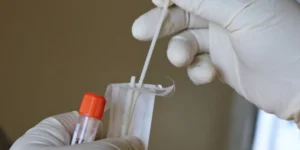
For rapid early parvo detection, consider Sabervet Canine Parvovirus Antigen Rapid Test which provides results in 10 minutes using immunochromatographic technology, with Diagnostic Sensitivity of 98.00% and Diagnostic Specificity of 97.50%. <a href="https://itgen.com/”>Contact ITGen Veterinary diagnostics & pet supplies</a> to request samples and pricing.
Early parvo detection means identifying infection within 1-3 days of symptom onset using rapid tests or PCR before severe complications develop, when treatment is most effective.
<h3>References</h3>
<ul>
<li><a href="https://www.avma.org/resources-tools/animal-health-diagnostics/canine-parvovirus”>AVMA: Canine Parvovirus Information</a></li>
<li><a href="https://www.merckvetmanual.com/digestive-system/diseases-of-the-stomach-and-intestines-in-small-animals/canine-parvovirus”>Merck Veterinary Manual: Canine Parvovirus</a></li>
<li><a href="https://www.vet.cornell.edu/departments-centers-and-institutes/baker-institute/our-research/canine-parvovirus”>Cornell University: Canine Parvovirus Research</a></li>
<li><a href="https://www.aphis.usda.gov/aphis/ourfocus/animalhealth/animal-disease-information/canine-disease-information/canine-parvovirus”>USDA: Canine Parvovirus Disease Information</a></li>
</ul>
Animal Health
What is Considered Early Detection of Parvo?
September 27, 2025
By bree@antigenne.com
10 min read



Related Articles

Animal Health
SaberVet pet diagnostic tests: How to test for relaxin in dogs?
The Canine Relaxin Rapid Blood Test provides veterinarians with an easy and quick way to do relaxin test for pregnancy…
May 29, 2024
Read More →
Animal Health
Why is Parvo so Deadly and Expensive to Cure?
<img src="https://www.antigenne.com/wp-content/uploads/2025/08/7cf0d9bb740f4b5db0569c52ec0d7a05.webp" alt="Dog Giardia Symptoms" width="1200" height="675" /> Parvo is deadly because it rapidly destroys intestinal cells and bone marrow,…
Sep 29, 2025
Read More →

Animal Health
What tests confirm avian influenza in birds?
What tests confirm avian influenza in birds? Identifying avian influenza requires more than noticing symptoms in birds. It needs proper…
Dec 7, 2025
Read More →