
- You should know the main types of animal surgical sutures. These include absorbable, non-absorbable, monofilament, multifilament, natural, synthetic, coated, uncoated, and special types. Each suture helps with healing and recovery. If you are a pet owner or a veterinary professional, you can make better choices when you know which suture to use. Good options like ITGen PDO Absorbable Sutures and PGA Absorbable Suture lower the risk of infection and help healing. The best choice depends on your animal’s needs and the surgery goal.
- Table of contents
- Key Takeaways
- Types of Animal Surgical Sutures
- PGA Absorbable Suture
- PDO Absorbable Suture
- Non-Absorbable Suture
- Suture Patterns and Sizes
- Suture Structure and Material
- Monofilament Sutures
- Multifilament Sutures
- Natural vs. Synthetic Sutures
- Coated, Uncoated, and Special Sutures
- Coated Sutures
- Uncoated Sutures
- FAQ
Quality and structure are important. Bad suture materials can cause infection or slow down healing. Picking the right suture type helps the surgery go well.
| Suture Material | Usage Percentage | Common Procedures |
|---|---|---|
| Non-absorbable multifilament | Most common | Skin closure |
| Short-acting monofilament | Most common | Subcutaneous closure |
| Long-acting monofilament | Most common | Internal cavity surgeries |
Key Takeaways
- Learn about the main suture types: absorbable and non-absorbable. Each type helps with different surgeries and healing times.
- Pick smaller sutures, like USP 4-0 PGA, for less swelling. Smaller sizes help soft tissues heal faster.
- Use coated sutures in surgeries where infection risk is high. They lower swelling and help wounds heal better.
- Choose monofilament sutures if infection might happen. They move easily through tissue and cause less swelling.
- Ask your veterinarian to find the best suture type for your pet’s surgery.
Types of Animal Surgical Sutures
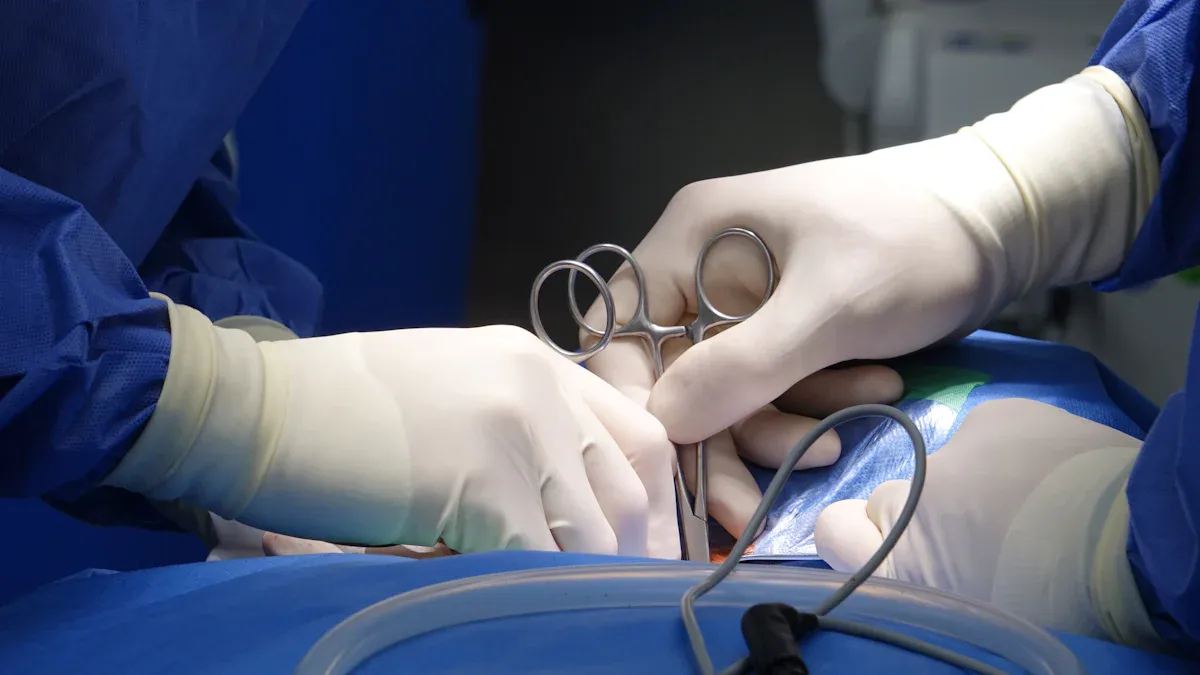
When you pick animal surgical sutures, you should know the main types. Each suture is best for certain surgeries and healing needs. The table below shows the main differences between absorbable and non-absorbable sutures:
| Feature | Absorbable Sutures | Non-Absorbable Sutures |
|---|---|---|
| Absorption | Degraded by body enzymes or hydrolysis | Not absorbed by the body |
| Removal | Not required | Required unless left permanently |
| Material | Natural or synthetic biodegradable | Non-degradable natural or synthetic |
PGA Absorbable Suture
PGA absorbable sutures are used a lot in animal surgery. They are good for inside tissues that heal fast. These sutures break down in the body, so you do not need to take them out. PGA sutures are strong at first and hold tissues together well after surgery. Their strength goes down over time, but they help healing when it matters most.
- PGA starts with the highest strength of all absorbable sutures.
- After three days, PGC sutures are strongest, but PGA is still good.
- By day fourteen, all absorbable sutures lose most of their strength.
You should use smaller PGA sutures, like USP 4-0, for dog belly cuts. These cause less swelling and help wounds heal better. Bigger sutures can cause more swelling, so smaller ones are safer for soft tissues.
| Aspect | Details |
|---|---|
| Objective | Test suture size effects on tissue stability and inflammation in canine abdominal surgery. |
| Method | Used different PGA suture sizes and measured tissue response. |
| Result | USP 4-0 PGA gave enough strength and less inflammation. |
| Conclusion | Smaller PGA sutures are better for healing and comfort. |
PDO Absorbable Suture
PDO absorbable sutures give support for a long time. These sutures dissolve slowly, usually in 180 to 210 days. They keep about 70% of their strength after 28 days, so they help tissues during the most important healing time. You will see less tissue damage and a lower chance of infection because PDO sutures are smooth and break down by hydrolysis.
The ITGen PDO Absorbable Sutures are a great choice. They use good materials and smart design. You can trust them for inside surgeries, like stomach or urinary tract surgery, where healing is slow and strong support is needed. ITGen PDO sutures come in many sizes, from 1/0 to 5/0, and each one is clean and easy to use. Their certifications (ISO 9001, GMP, CE) show they are safe and high quality. You can learn more about ITGen PDO Absorbable Sutures in our suture product category.
Tip: Pick PDO sutures for surgeries where tissues need support for months, not just weeks.
Non-Absorbable Suture
Non-absorbable sutures do not break down in the body. You have to remove them later unless they stay in for permanent support. These sutures are best for closing skin, fixing bones, and surgeries that need lasting strength.
Common non-absorbable suture types are:
- Nylon: Good for closing skin, bone, and dental surgery. Nylon slides easily and does not bother tissues much.
- Polyester: Used for heart and blood vessel surgery.
- Polypropylene: Good for plastic and eye surgery.
You will use non-absorbable sutures for:
- Bone surgery (fixing tendons and ligaments)
- Heart and blood vessel surgery (holding blood vessels)
- Skin closure (outside cuts)
- Dental surgery (mouth tissues)
- Eye and plastic surgery (soft tissues)
Non-absorbable sutures stay strong and steady, so they are great for places that move or stretch.
Suture Patterns and Sizes
You need to choose the right suture pattern and size for each surgery. The pattern helps the wound heal and keeps it closed. The size changes how much swelling the tissue gets.
| Suture Pattern | Selection Criteria |
|---|---|
| Simple Interrupted | Closes skin edges well, stops wound from opening |
| Cruciate | Stronger than continuous, good for skin |
| Continuous Buried | Quick to put in, not as strong as interrupted |
| Allgower-Donati | Lowers swelling, helps healing with special care |
When you pick suture size:
- Smaller sutures (like USP 4-0 PGA) cause less swelling and help wounds heal faster.
- Bigger sutures can cause more swelling and slow healing.
| Suture Size | Inflammatory Response | Healing Impact |
|---|---|---|
| Smaller Gauge (4-0) | Less swelling | Better healing |
| Larger Diameter | More swelling | Slower healing |
Note: Always match the suture pattern and size to the tissue type, healing speed, and risk of infection. Picking the right suture lowers problems and helps animals heal better.
You can find more about suture types and how to pick them in our animal surgical sutures guide.
Suture Structure and Material
Monofilament Sutures
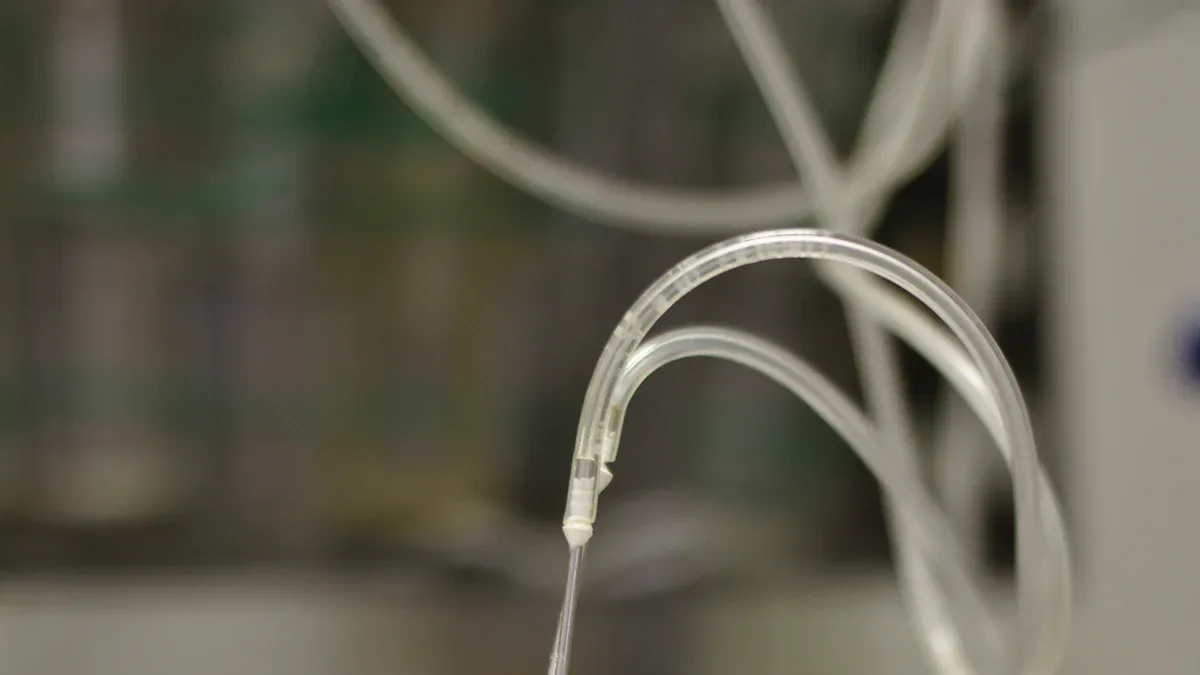
Monofilament sutures are made from one smooth strand. This strand slides through tissue easily. It causes less friction and less swelling. Healing is faster with monofilament sutures. Bacteria cannot hide in these sutures. This lowers the chance of infection. Monofilament sutures are good for surgeries where infection is a worry.
| Suture Type | Structure Characteristics | Performance Impact |
|---|---|---|
| Monofilament | Simple structure, low frictional resistance | Easier passage through tissue, less inflammation |
| Multifilament | Twisted structure, higher strength and roughness | Higher friction, more tissue abrasion, potential for increased pain and recovery time |
Monofilament sutures need more knots to stay tight. They do not drag on tissue much. You can use them for surgeries inside the body and wounds that must heal cleanly.
Tip: Monofilament sutures help stop infections because bacteria cannot move inside the strand.
Multifilament Sutures
Multifilament sutures have many strands twisted together. This makes them strong and bendy. You can tie knots with fewer throws. Multifilament sutures feel soft and are easy to handle. They work well in small spaces.
- Multifilament sutures hold knots very well.
- They are flexible and easy to use.
- You can use them for soft tissue and inside closures.
But multifilament sutures let bacteria and fluids move between strands. This can cause more infections and swelling. You should not use multifilament sutures in dirty wounds.
| Feature | Monofilament Sutures | Multifilament Sutures |
|---|---|---|
| Knot Security | Requires more throws | Excellent, fewer throws |
| Handling | Slightly stiff | Soft and flexible |
Natural vs. Synthetic Sutures
You can pick natural or synthetic suture materials. Natural sutures, like silk and catgut, come from animals or plants. Synthetic sutures, like polydioxanone and nylon, are made in factories.
| Feature | Natural Sutures (e.g., Catgut, Silk) | Synthetic Sutures |
|---|---|---|
| Immunogenic Response | More immunogenic due to proteolysis | Less immunogenic due to hydrolysis |
| Degradation Process | Degraded by proteolysis | Degraded by hydrolysis |
| Absorbability | Varies; generally absorbable | Can be absorbable or non-absorbable |
| Inflammatory Response | Higher inflammation | Lower inflammation |
| Handling Characteristics | Braided sutures cause more irritation | Monofilament sutures cause less irritation |
Natural sutures are strong but can cause more swelling. Synthetic sutures are safer for the body and lower infection risk. You should choose suture material based on healing and how the tissue reacts. Polyglecaprone 25, a synthetic suture, absorbs in 21 days and causes little swelling. Silk, a natural suture, can cause more swelling and debris.
Note: Always pick suture material that fits the surgery and patient. This helps lower problems and makes healing better.
Coated, Uncoated, and Special Sutures
Coated Sutures
Coated sutures have a smooth layer on them. This layer helps the suture move through tissue easily. It causes less swelling and lowers infection risk. Many coated sutures use triclosan to fight germs. Studies show triclosan-coated sutures can stop infections at surgery sites. The CDC says these sutures are good for people, and animals get the same benefits. Using coated sutures helps wounds heal faster and lowers problems after surgery.
| Suture Type | Infection Risk | Healing Outcome |
|---|---|---|
| Coated (Triclosan) | Lower | Improved |
| Uncoated | Higher | Slower |
Pick coated sutures for surgeries where infection is a big worry. They work well for belly or joint surgeries.
Tip: Coated sutures are smart if you want less infection and clean healing.
Uncoated Sutures
Uncoated sutures do not have a smooth layer. They feel rougher but hold knots better. Use uncoated sutures when you need strong knots. These sutures can cause more swelling and tissue drag. They may also make tissue react more. Use uncoated sutures for closing skin or when knot strength matters.
- Coated sutures slide easily and cause less swelling.
- Uncoated sutures hold knots better but may irritate tissue more.
Special Sutures (Antibacterial, Barbed, Tension)
Special sutures help with tough surgeries. Antibacterial sutures have triclosan to stop germs. This lowers infection risk and helps wounds heal faster. Barbed sutures have tiny hooks. The hooks keep the suture in place, so you do not need knots. Barbed sutures save time and keep tension even. Tension sutures help close wounds under stress. They spread force, improve blood flow, and lower scars.
Use antibacterial sutures for surgeries with high infection risk, like bowel surgery. Barbed sutures are good for long wounds or places where knots are hard. Tension sutures work best for big wounds or skin that pulls apart.
Note: Choosing the right suture, coated, uncoated, or special, helps wounds heal well and lowers problems.
You have learned about the main types of animal surgical sutures. Each type has its own use. You can pick the best suture for your animal. Knowing about sutures helps you make good choices. Good sutures like ITGen PDO Absorbable Sutures help your pet heal and stay safe.
You should talk to your vet and ask which suture is best for your pet’s surgery.
FAQ
What is the difference between absorbable and non-absorbable sutures?
Absorbable sutures break down inside your animal’s body. You do not have to take them out. Non-absorbable sutures stay in the body. You need to remove them or leave them in for support.
When should you use monofilament sutures?
Monofilament sutures are good for surgeries with high infection risk. They move through tissue easily. These sutures cause less swelling. They help wounds heal faster.
Are coated sutures better for animal surgery?
Coated sutures lower the chance of infection. They slide through tissue without much trouble. You should use coated sutures for surgeries in places with lots of bacteria or slow healing.