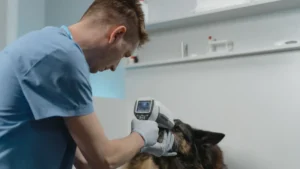
<a href="https://www.vet.cornell.edu/departments-centers-and-institutes/baker-institute/our-research/canine-parvovirus”>Canine parvovirus</a> is a silent scourge threatening our beloved dogs. This highly contagious disease, lurking within feces and contaminated objects, poses a significant risk, especially to puppies and unvaccinated dogs. Recognizing early symptoms like vomiting and bloody diarrhea quickly can mean the difference between life and death. With timely intervention, such as using a <a href="https://www.antigenne.com/product/sabervet-canine-parvovirus-antigen-rapid-test/”>parvovirus canine</a> test, and advanced biologics, survival rates improve dramatically.
<h2>What are the primary causes of canine parvovirus transmission?</h2>
Canine parvovirus spreads like wildfire, instilling fear in dog owners everywhere. Direct contact with infected feces or contaminated environments primarily drives its transmission. Dogs can contract the virus by sniffing or licking infected surfaces. The heartache of seeing your pet suffer is preventable, making understanding transmission crucial for dog owners.
<img src="http://itgen-n8n.oss-us-west-1.aliyuncs.com/images/2025-11-04/68e5a9f6-cd64-4f28-9d3f-d05b5451ad09-fc5ce96d9d4b4aeaaed08f121f25bdcb.png" alt="Direct contact with infected feces or contaminated environments is the main cause of parvovirus spread. photographic, realistic photo of a dog sniffing the ground, blurred background suggesting a park.">
Infected dogs shed the virus in their feces, turning simple outings into risky ventures. It can persist on surfaces for months, making regular disinfection pivotal. High traffic dog areas amplify transmission risk, emphasizing the need for vigilance. As owners, we must guard against complacency, prioritizing sanitation to protect our furry friends.
As we dig deeper, consider how ubiquitous the surfaces are that they touch daily and the vital role of hygiene and restriction in mitigating exposure.
<table>
<tr>
<th>Transmission Sources</th>
<th>Mitigation Efforts</th>
</tr>
<tr>
<td>Infected feces</td>
<td>Regular cleaning and hygiene</td>
</tr>
<tr>
<td>Contaminated soil</td>
<td>Avoid high foot-traffic areas</td>
</tr>
<tr>
<td>Shared bowls and toys</td>
<td>Regular toys and bowls disinfection</td>
</tr>
</table>
<h2>What are the most common symptoms seen in infected dogs?</h2>
Seeing our playful pups become lethargic is harrowing. Parvovirus often begins with severe vomiting, bloody diarrhea, lethargy, and loss of appetite. These alarming symptoms should ring emergency bells for dog owners. Quick recognition can lead to timely veterinary help, which is essential for a fighting chance.
<img src="http://itgen-n8n.oss-us-west-1.aliyuncs.com/images/2025-11-04/a0611ba2c-36b-4374-bcb5-acf6e9433986-a3e9d6752c984f888cbac07845906883.png" alt="Severe vomiting, bloody diarrhea, lethargy, and loss of appetite are hallmark signs of parvovirus infection in dogs. photographic, realistic photo of a sick puppy, looking weak and curled up in a warm blanket.">
The urgency lies in the rapid progress of these symptoms. As dehydration sets in, shock can follow suit without intervention. Heartbreaking as it is, these signs often emerge suddenly, catching owners off-guard. Early symptom tracking can pivotally tip the balance towards recovery instead of despair.
Grapple with how your dog’s daily demeanor could drastically shift within hours, underscoring constant observation as vital.
<table>
<tr>
<th>Symptoms</th>
<th>Immediate Actions</th>
</tr>
<tr>
<td>Vomiting and diarrhea</td>
<td>Initiate hydration, seek vet help</td>
</tr>
<tr>
<td>Lethargy and weakness</td>
<td>Comfort, isolate, initiate vet call</td>
</tr>
</table>
<h2>How is canine parvovirus effectively treated in clinical practice?</h2>
Once diagnosed, aggressive action is required. Veterinarians who <a href="https://www.antigenne.com/product/”>pet diagnose</a> this virus rely on treatments that lean heavily on <a href="https://www.avma.org/resources-tools/pet-owners/petcare/canine-parvovirus”>supportive care</a>, emphasizing IV fluids, anti-nausea medication, and antibiotics to prevent secondary infections. These methods, combined with modern <a href="https://www.antigenne.com/”>pet diagnostics</a>, provide a critical lifeline, offering a glimmer of hope in dire times.
<img src="http://itgen-n8n.oss-us-west-1.aliyuncs.com/images/2025-11-04/9367cff1-bf7e-4016-afad-f358bcf62f43-b55196886c9a4117a70b1acbf3cb2671.png" alt="Treatment involves aggressive supportive care, including IV fluids, anti-nausea medication, and antibiotics to prevent secondary infections. photographic, realistic photo showing a veterinarian gently attending to a small dog, administering IV fluids, in a clean, clinical setting.">
Treatment outcomes hinge on the speed of intervention. Supportive care rehydrates and stabilizes the dog while targeting emerging infections. Evolutionary biologics fortify this regimen, ushering in a new era of improved survival rates. It’s a beacon of progress and a stark reminder of how pivotal timely action is.
Think of how important every minute can be, and the modern developments in veterinary care that have revised success rates.
<table>
<tr>
<th>Treatment Element</th>
<th>Impact on Survival</th>
</tr>
<tr>
<td>IV fluids</td>
<td>Correct dehydration</td>
</tr>
<tr>
<td>Anti-nausea medications</td>
<td>Reduce vomiting, enable intake</td>
</tr>
<tr>
<td>Antibiotics</td>
<td>Combat secondary bacterial threats</td>
</tr>
</table>
<h2>In what ways can prevention strategies reduce the risk of infection?</h2>
Prevention spells hope. <a href="https://www.aaha.org/aaha-guidelines/vaccination-canine-configuration/vaccination-recommendations-for-general-practice-map/core-canine-vaccines/”>Robust vaccination</a>, a strict hygiene regime, and the isolation of sick animals markedly reduce parvovirus risk. Such tactics arm us against the invisible threat, securing our pups’ well-being. Preventative measures speak to proactive pet ownership essentials.
<img src="http://itgen-n8n.oss-us-west-1.aliyuncs.com/images/2025-11-04/51cc32ea-706b-4ba1-a53d-c4ad9e36b431-3eb86ba2c00a456a95f76c5683bd81fa.png" alt="Vaccination, strict hygiene, and isolation of sick animals are crucial for preventing parvovirus and protecting susceptible dogs. photographic, realistic photo of a healthy puppy getting a vaccine shot from a vet, or a clean, disinfected dog area.">
Vaccination safeguards against susceptibility, forming a frontline defense against the virus. Hygiene maintains an environment inhospitable to transmission. Isolating infected dogs curtails spread, preserving the health of others. Each measure acts as a puzzle piece in the comprehensive care picture essential for canine longevity.
Conceptualize the interconnectedness of these strategies in a health-defense tapestry, emphasizing proactive dog health management.
<table>
<tr>
<th>Prevention Strategy</th>
<th>Effectiveness Measure</th>
</tr>
<tr>
<td>Vaccination</td>
<td>Immunity boost, lowering risk</td>
</tr>
<tr>
<td>Hygiene practices</td>
<td>Environmental virus elimination</td>
</tr>
<tr>
<td>Isolation practices</td>
<td>Spread prevention</td>
</tr>
</table>
<h2>Conclusion</h2>
Understanding parvovirus empowers preventive actions. Act on early signs, implement prevention strategies, and ensure timely treatment for hopeful outcomes.
<h3>References</h3>
<ul>
<li><a href="https://www.vet.cornell.edu/departments-centers-and-institutes/baker-institute/our-research/canine-parvovirus”>Cornell University, Baker Institute for Animal Health – Canine Parvovirus</a></li>
<li><a href="https://www.avma.org/resources-tools/pet-owners/petcare/canine-parvovirus”>American Veterinary Medical Association (AVMA) – Canine Parvovirus</a></li>
<li><a href="https://www.aaha.org/aaha-guidelines/vaccination-canine-configuration/vaccination-recommendations-for-general-practice-map/core-canine-vaccines/”>American Animal Hospital Association (AAHA) – Canine Vaccination Guidelines</a></li>
</ul>